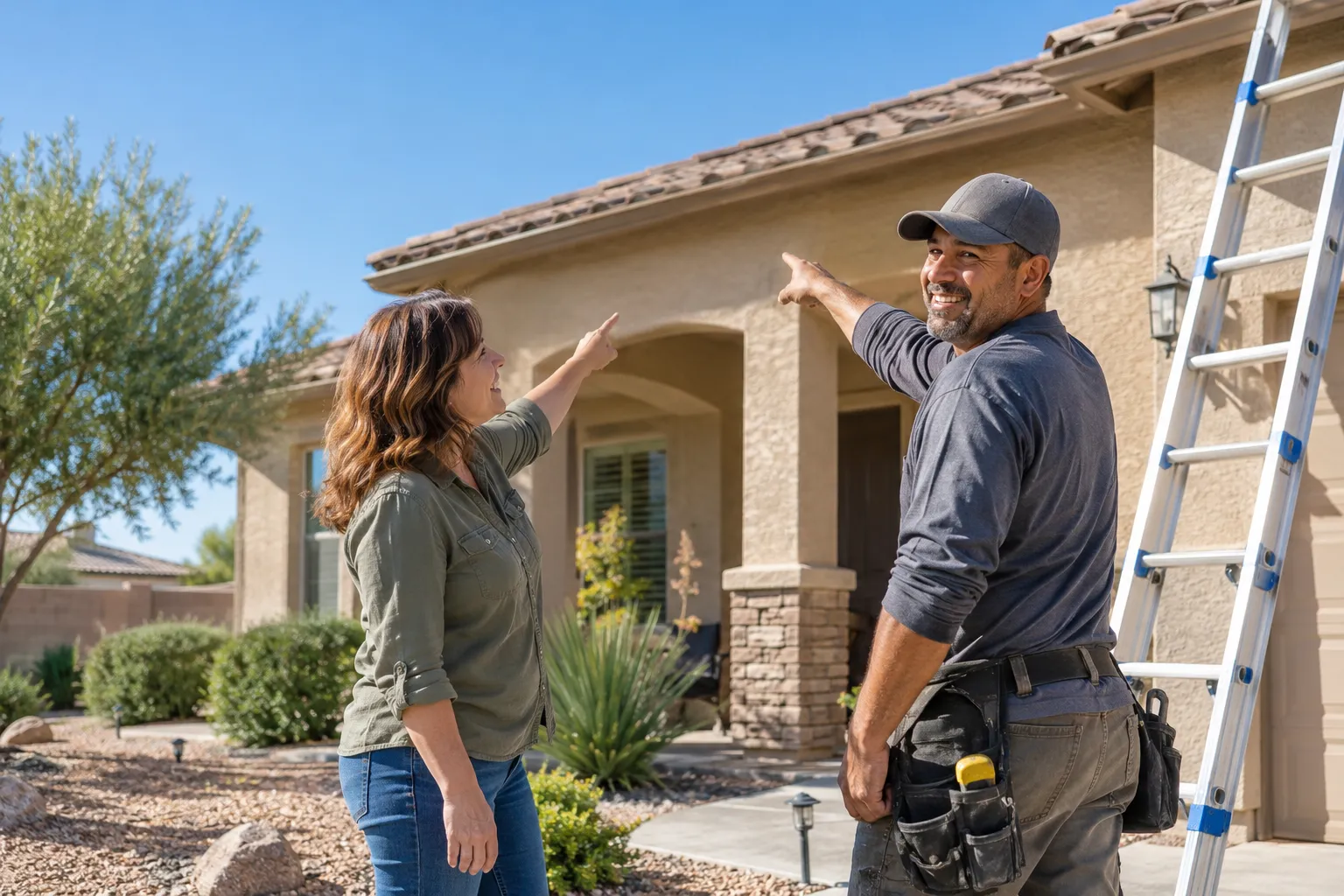
Roof Repair Help for Homeowners
Request an estimate in minutes
A roof problem can feel confusing the first time. You see a stain, a missing shingle or a drip, and you have no idea what it means. This page explains the basics in plain terms: what causes leaks, what a repair involves, and when a repair stops making sense.
Fightmix Roofing is a referral service. We do not repair roofs. You send a request, and we match it to an independent provider in our network who does the work and gives you a written quote. Our network focuses on larger projects, so if your roof is worn out, we can help. Tiny patch-only jobs may not be a match. Quote before commitment, and no obligation to hire anyone.
Active Leak? Do This First
Stay off the roof. Wet surfaces and ladders cause serious falls. From inside, move furniture and valuables away from the drip. Set a bucket under it. Take clear photos of the stain, the ceiling and any visible roof damage.
If water is near light fixtures or outlets, switch off power to that area. These notes help you stay safe while you wait for a provider. They are not repair instructions.
Who Does What Here
Here is the model, stated plainly. Fightmix Roofing takes your request and routes it to an independent local provider in our network. The provider inspects, quotes and does the work. We do not send crews, set prices or perform repairs.
Our network focuses on roofs that need replacement or a new install. If your issue is a small patch, the provider may say so, and you can look for a repair-only roofer instead. Provider availability varies. Request a callback to check what is open near you.
What "Emergency Roof Repair" Really Means
Emergency roof repair is a short-term fix to stop water from entering. Think of a tarp over a hole or sealed flashing. It is not the permanent solution. Many providers can respond quickly, but timing depends on weather and demand.
After the emergency step, a permanent plan follows. That plan is either a proper repair or a replacement.
Why Small Leaks Spread
Water travels. It enters at one point, runs along a rafter or the decking, and shows up as a stain feet away. So the stain is rarely the source.
Left alone, moisture soaks insulation, stains drywall and softens the wood underneath. Mold can start in damp areas. What began as a small fix can turn into a bigger project.
Common Roof Repairs
A repair means fixing one problem area instead of the whole roof. The usual jobs are:
- Shingle replacement: swapping out cracked, curled or missing pieces.
- Flashing repair: resealing the metal strips around chimneys, vents and walls.
- Pipe boot replacement: new rubber collars around plumbing vents.
- Sealant work: closing small gaps and exposed nail heads.
- Decking repair: replacing soft wood under the surface.
How a Provider Finds the Leak
A good inspection starts inside. The provider checks the attic for damp wood, dark trails and wet insulation. Then they go up top and trace the path back to the entry point.
They look at flashing, vents, valleys and the roof surface. Some use a moisture meter or a water test. Ask for photos of what they find, so you can see the problem yourself.
Repair or Replace?
This is the key decision. A repair works when the damage is limited and the rest of the roof is sound. Replacement makes more sense when the roof is near the end of its life.
Signs a Patch Will Not Hold
- Leaks in more than one spot
- Shingles curling, cracking or shedding granules across large areas
- A roof close to or past its expected lifespan
- Soft or sagging decking
- Repairs that keep failing
If several of these fit, ask the provider to quote both options side by side. Paying for repeated patches can add up to more than a new roof.
Temporary Fixes That Are Safe
Keep it simple and stay on the ground when you can. Inside, catch drips and puncture a bulging ceiling bubble carefully into a bucket to release trapped water. Outside, leave tarping to a provider, since it is risky work.
Do not apply random sealant to a wet roof. It often traps moisture and hides the real source.
Repairs on Different Roof Types
Materials behave differently. Asphalt shingles are the most common and the simplest to patch. Tile and metal need matching parts and careful handling. Flat or low-slope sections, common on older bungalows, rely on sealed membranes that fail at seams.
Stucco ranch homes often have wide, low roofs with many vent penetrations. Each one is a possible leak point. Long dry seasons dry out sealants, so the first winter rain event is often when weak spots appear.
Storm Damage Repair and Hail
After a storm, look for dented metal, bruised shingles and debris. Storm damage repair can be small, but widespread hail damage often points to hail damage roof replacement instead. Some policies may cover sudden damage, so check your policy. Providers can often help document damage for a claim.
Choosing Local Roofing Contractors
Local roofing contractors know regional weather and local permit rules. Ask each one these questions:
- Are you licensed and insured in this state?
- Will you show photos of the problem?
- Is the quote written and itemized?
- Who does the work, your crew or subcontractors?
Verify licenses and insurance yourself with the state. We do not vouch for any provider's credentials.
Get the Quote in Writing
A written quote lists the scope, materials, cost and warranty terms from the provider. Compare it against at least one other. Never pay in full upfront.
What's Included
Leak Source Inspection
A provider checks the attic and the roof surface to trace water back to where it enters.
Written Quote
You get an itemized quote that spells out scope, materials and price before any work.
Repair or Replace Advice
The provider explains whether a patch is enough or the whole roof is near its end.
Provider Matching
Your request is routed to an independent local provider in our network, with no obligation to hire.
Typical Roof Repair Costs
These are typical U.S. ranges, not quotes. Real prices depend on roof size, pitch, materials, access and local rates. Always get a written quote, and compare it with a second one before you decide.
| Item | Typical range | Notes |
|---|---|---|
| Shingle patch repair | $150 – $600 | Small area, asphalt roofs |
| Flashing repair | $200 – $900 | Chimneys, walls, skylights |
| Pipe boot replacement | $150 – $450 | Per vent penetration |
| Emergency tarping | $300 – $1,200 | Short-term cover only |
| Decking repair | $300 – $1,500 | Depends on rotted area |
| Full roof replacement | $8,000 – $25,000 | Often compared against repeated repairs |
How It Works
Send Your Request
Tell us about the leak, damage or roof age using the short estimate form.
Get Matched Locally
We route your request to an independent provider in our network who fits the job.
Review the Quote
The provider inspects and sends a written quote. Compare it and ask questions.
Decide Your Next Step
Hire the provider or walk away. You have no obligation either way.
Why Call Fightmix Roofing
Plain Referral Model
We say exactly who does what. We connect you, and an independent provider does the work.
Quote First
You see a written quote before committing to anything, with no pressure.
Beginner Friendly
Roofing terms are explained once, in simple words, so first-timers can follow along.
Local Providers
Requests go to providers in our network who work near your home.
Other Services
Need roof repair in Loomis?
Send a request for a roof estimate, or write to contact@fightmix.living. A provider in our network follows up with a written quote.
No obligationRoof Repair FAQ
How do I know if my roof needs repair or replacement?
Limited damage on a roof that is otherwise sound usually means repair. Leaks in several spots, curling shingles, sagging decking or an older roof often point to replacement. Ask the provider to quote both so you can compare.
Does homeowners insurance pay for roof repair?
Some policies may cover sudden damage, such as storm or hail damage, but usually not wear and age. Check your policy and contact your insurer. Providers can often help document damage for a claim.
Can I fix a roof leak myself?
Small indoor steps, like catching drips, are fine. Climbing onto a roof is dangerous, and quick sealant can hide the real source. Leave roof work to a licensed provider.
Tell us what happened
Send a request for a roof estimate, or write to contact@fightmix.living. A provider in our network follows up with a written quote.
No obligation